Technology on Exhibition Stands
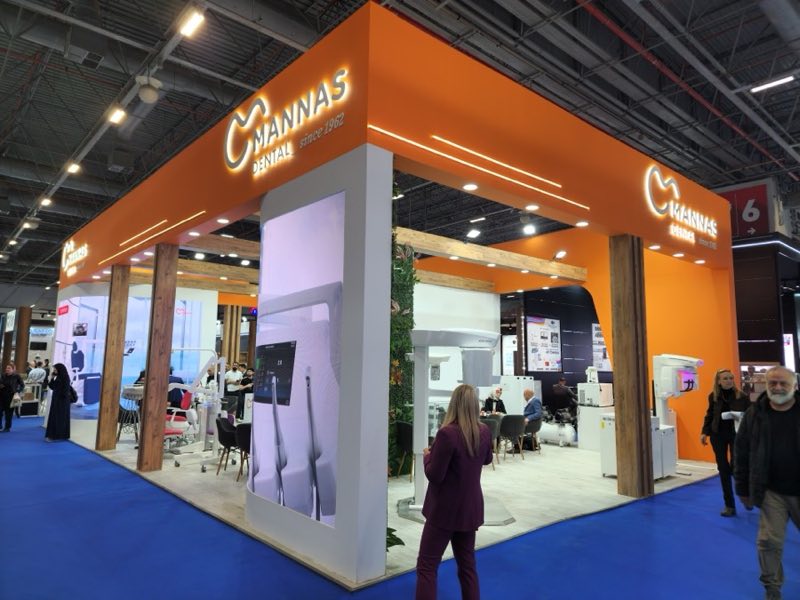
Stand technology earns its place by two measures: what it makes the visitor do, and what it feeds into lead capture. Judge hardware by those questions and it becomes an instrument; skip them and it becomes expensive decoration.
Screens live or die by content
An LED wall is powerful long-range signage — exactly as good as what plays on it. Build short, silent-legible, looping content that a walking visitor grasps in three seconds; the ten-minute corporate film belongs on the website. Match screen size to viewing distance and pixel pitch to proximity, and produce content at the screen's real ratio — a stretched standard deck on a bespoke LED shape advertises carelessness. Content production, not hardware rental, is the long-lead item: start it with the stand design.
The live demo
Nothing on a stand outperforms the product actually working. Plan three elements: a short, repeatable demo cycle; open space where a small crowd can form; and a person who narrates. Scheduled demo times give visitors a reason to come back and make the crowding predictable.
Interactive stations
- Configurators: visitors build their own scenario — strongest for wide product ranges
- VR/AR: walking visitors through what cannot ship to a stand — plants, vessels, installations
- Gamified content: short scored experiences that generate crowds and contacts
Wire every station to a capture moment: results emailed, demo registration, a scoreboard entry. A station that produces no record entertains the aisle for free.
Ownership per device
Assign every station an owner: who runs it, who explains it, who responds when it fails. Even "self-service" kiosks convert better with a host nearby — an unowned station is abandoned by its second frustrated user. Keep the failure script simple: written restart steps, the vendor's support line saved, and a plan to close and re-dress the corner if the device stays down. A dead screen is worse than no screen.
Infrastructure and dosage
Order wired internet early for anything critical — hall Wi-Fi degrades exactly when the fair succeeds — and test offline modes so a dropped line stays invisible to visitors. Uninterrupted power, spare devices and a morning systems check complete the routine. On quantity: every station splits attention, and one strong experience beats three average ones on any small or medium stand. Afterwards, read the usage data — interactions, dwell, records produced — and let it decide what returns next year: the station that started conversations grows, the one that was merely watched goes.
Content is the schedule risk
Hardware rents in days; content takes weeks. Start screen loops, configurator data and VR scenes with the stand design, produce them at the real screen dimensions, and load final versions onto the devices before build — with backups on a drive in the stand crew's bag. Give every station an owner and a written failure script: restart steps, the vendor's support number, and the decision point at which the corner gets closed and re-dressed rather than apologised for. Afterwards, let the usage data allocate next year's technology budget: interactions, dwell time and records produced tell you which station earned its floor space and which merely glowed.
For end-to-end support with your exhibition stand or corporate event — from design to on-site delivery — get in touch, or see our recent projects.