Sustainable Exhibition Stand Practices
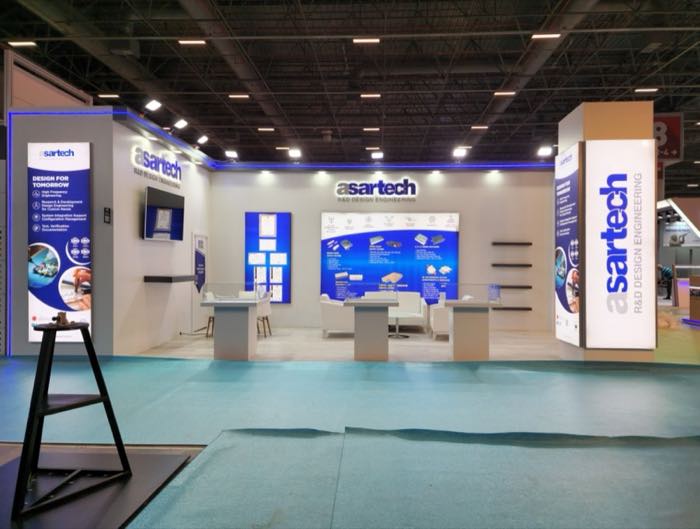
The traditional fair cycle — build, exhibit for three days, skip — is increasingly hard to defend environmentally and financially. The sustainable alternative is not a material swap; it is a design decision about how many lives the stand will have.
Design for lifespan
The question belongs on the design table: how many fairs will this stand serve? A multi-fair stand is designed with demountable joints, standard module dimensions and parts that adapt to different plot sizes. The single-use design is the most expensive per fair, always.
Material strategies
- Bolted and slotted joints instead of glued assemblies — parts survive to reassemble
- Modular aluminium skeletons that outlast dozens of fairs
- Fixed structure, changing skin: only graphics renew per fair
- Undated graphic design — no year, no fair name, full reusability
- Rented inventory for furniture, screens and lighting
Fabric tension systems — printed textile on aluminium frames — have become the workhorse of sustainable stands: light to ship, resilient, and re-skinned at low cost. Rented flooring closes one of the largest single-use waste streams: one-fair carpet.
The loop needs a warehouse
Reuse works through storage: inventoried parts, proper conditions, pre-fair maintenance. Once the loop runs, second and subsequent fairs cost freight, refurbishment and new skins — a fraction of a rebuild. That delta is the business case, and it is strongest when the annual fair calendar is known: stand investment and fair portfolio are one decision, made at one table.
On-site habits
Production proofs prevent reprint waste. QR catalogues thin the brochure pile. Leftover promotional stock travels to the next event instead of the skip. At dismantling, materials get sorted — and the crew briefing says so explicitly, because intentions become practice on the floor, or nowhere. Check the organiser's own sustainability programme: many large fairs provide sorting infrastructure, carpet recycling and reuse guidance, and some certify or award sustainable stands — participation documents your practice with third-party weight.
Claim only what you can count
Communicate concretely: this frame is on its ninth fair, this furniture is rented inventory, these graphics carry no date. Verifiable statements build credibility; generic green claims spend it. Where corporate sustainability reporting exists, feed the stand data in — printed items avoided, reuse rates, waste sorted — in the format that team uses. Three modest, checkable numbers outweigh any slogan.
Material choices with a test
Evaluate any material for reuse with three questions: does it dismantle and rebuild without damage, does it survive transport, can it be repaired on site? Modular timber panels outlive one-piece joinery; fabric-and-frame systems ship light and re-skin cheaply; rented flooring closes the single-fair carpet waste stream. Then defend the decision with a spreadsheet: first build cost, per-fair renewal, storage and freight compared across a three-year projection against serial rebuilds. The single-use path wins the first invoice and loses the total — which is why the stand investment decision and the annual fair plan belong at the same table.
For end-to-end support with your exhibition stand or corporate event — from design to on-site delivery — get in touch, or see our recent projects.