Exhibition Stand Types Compared
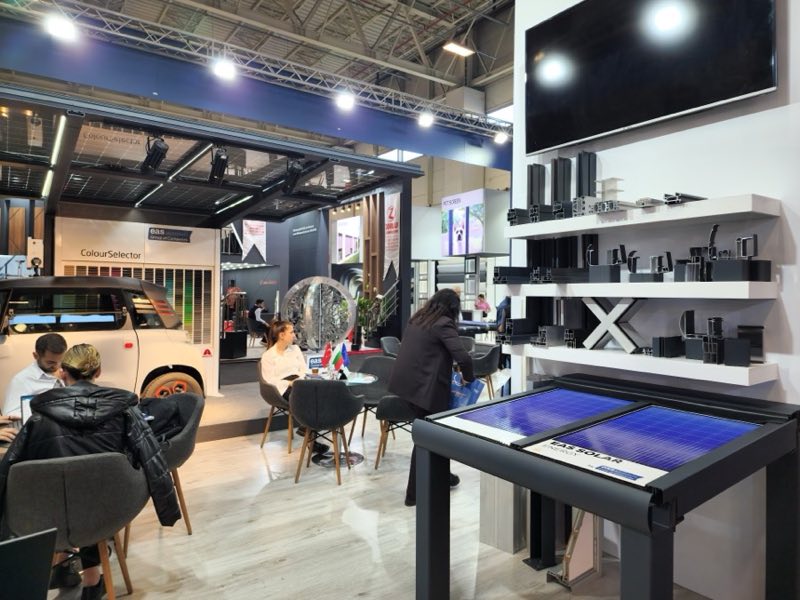
After the decision to exhibit, the first technical choice is the stand type. Shell scheme, modular system and custom build differ in cost, lead time and visibility — and the right answer depends on what the participation is meant to achieve.
Shell scheme
The organiser's standard package: panel walls, a fascia name board, basic lighting, usually a table and chairs. It is the fastest and cheapest entry — no separate production process at all. Its limit is anonymity: every shell scheme looks like its neighbours. The standard upgrade is graphic wraps on the panels, which deliver visible differentiation on a small budget. For first-timers, market tests and presence-only participations, shell scheme is a rational start.
Modular systems
Reusable structures built from aluminium profiles and panels — more customisable than shell scheme, cheaper than custom. Their core strength is repeatability: the same kit reconfigures to different floor plans at different fairs. For companies exhibiting several times a year, total cost of ownership beats one-off builds decisively. The constraint is geometric: the design lives within the system's dimensions and connections, so free-form architecture is out of reach.
Custom builds
Designed and fabricated for one brand, with full architectural freedom: double decks, enclosed meeting rooms, sculptural facades. Visibility and brand impact are the highest of the three — and so are the demands: months of lead time, larger budgets, real logistics. Custom builds pay off on high-stakes participations: new market entry, distributor recruitment, launches, image repositioning. At international fairs, add the organiser's design-approval process to the calendar.
The comparison in one view
- Cost: shell < modular < custom
- Lead time: shell (weeks) < modular < custom (months)
- Differentiation: shell < modular < custom
- Reusability: modular highest; custom depends on design; shell none
- Multi-fair calendars: modular wins on economics
Choosing — and changing
Three questions settle it: how ambitious is the goal (visibility targets justify custom or strong modular; presence goals do not); how many fairs a year (multiple bookings favour modular); how big is the space (a small plot with excellent graphics beats a badly planned custom build). Most exhibitors travel a staged path — shell first, growing modular as the market proves out, custom for the strategic stage — and moving down a tier is equally legitimate when a mature market needs relationship care rather than spectacle. Whatever the type, clarify ownership terms: purchase versus rental, storage responsibility, and for custom builds the intellectual property in the design — invisible clauses until the day you change contractors.
Reading the choice as a portfolio
The stand-type decision belongs inside the annual fair plan, not alone: a year with one anchor fair and three presence fairs might pair one custom build with a reconfigurable modular kit, the two sharing a graphic language so the brand reads consistently at every scale. Let the data steer upgrades — conversation counts, visitor feedback and competitor comparison from this year's stand justify or postpone next year's step up. And read the total cost over the cycle, not the invoice: a modular system's price spread across five fairs, storage included, is the honest comparison against rebuilding shell upgrades every time.
For end-to-end support with your exhibition stand or corporate event — from design to on-site delivery — get in touch, or see our recent projects.