Exhibition Stands Abroad: A Practical Guide
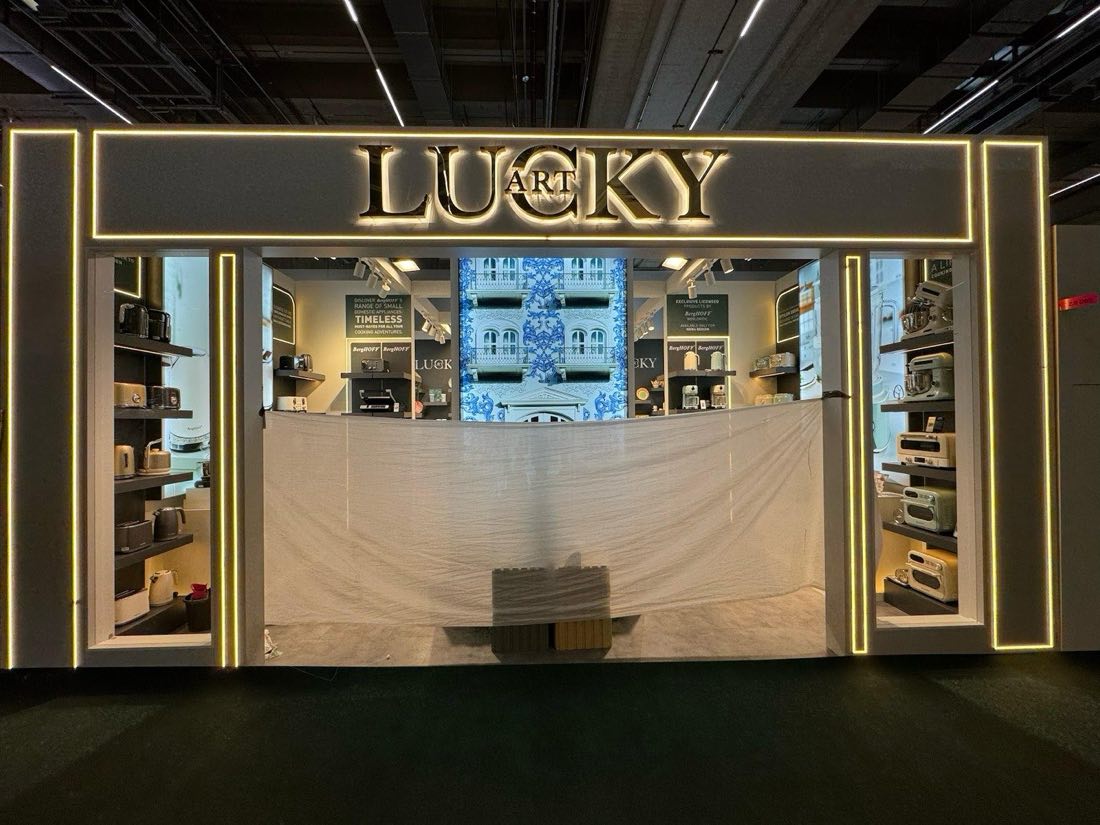
Exhibiting abroad multiplies every stand decision by distance: production happens in one country, delivery in another, and the fair opens on schedule regardless. This guide walks the five decisions that determine whether the stand works as hard as the trip costs.
1. Choose the stand option deliberately
Organisers offer shell scheme packages — fast, economical, anonymous; graphic wraps are their one strong upgrade. Modular systems travel and reconfigure, the economical choice for multi-fair years. Custom builds deliver the strongest brand presence and demand the longest runway: design approval, fabrication and freight all stack onto the calendar. Match the option to the goal of this specific participation, not to habit.
2. Build the timeline backwards
Healthy custom-stand timelines run months deep: plot booking and design brief first; 3D approval and production planning next; fabrication, graphics and freight in the final stretch; build completing one to three days before opening, dismantling immediately after close. Every stage has an owner and a date, and international fairs add organiser design-approval time that domestic calendars never see. Late starts do not compress the work — they delete the revision rounds.
3. Respect the logistics
Getting the stand and products to the hall on time is as decisive as the design. Freight mode, temporary export documents such as the ATA Carnet, the organiser's in-hall handling monopoly and your assigned delivery slot all belong in one plan with buffers for borders. One fair-experienced partner coordinating forwarder, customs and build crew turns four failure points into one phone number.
4. Plan the stand as a working space
- A welcome zone where first contact happens without blocking the aisle
- Product display and demo areas on the visitor's natural path
- A seated meeting corner, sheltered from traffic — semi-enclosed where space allows
- Storage and a service niche, invisible to visitors
A beautiful stand that cannot host a conversation is scenography; the layout is the sales tool.
5. Plan past the closing day
The fair's real yield is decided afterwards: contacts collected in a standard format, promises delivered in the first week, follow-up paced by qualification. Book the follow-up capacity before the fair — the week after is predictable and always busier than planned. And record everything about the participation itself: costs, timings, lessons. The second international fair is planned from the first one's file, which is what makes it cheaper, calmer and more productive.
The file that pays for itself
Everything about a first international participation belongs in one project file: the organiser's technical rules and approval correspondence, quotes and actuals, freight documents and slot confirmations, build photos, the lead list and its follow-up outcomes, and a plain-language lessons page written within a month. The file's value compounds: the second fair is planned from it in a fraction of the time, support-programme applications draw their documentation from it, and when the team changes — teams change — the institutional knowledge survives the handover. Exhibitors who keep the file improve every year; those who rely on memory repeat year one at year-three prices.
For end-to-end support with your exhibition stand or corporate event — from design to on-site delivery — get in touch, or see our recent projects.