Exhibition Stand Lighting
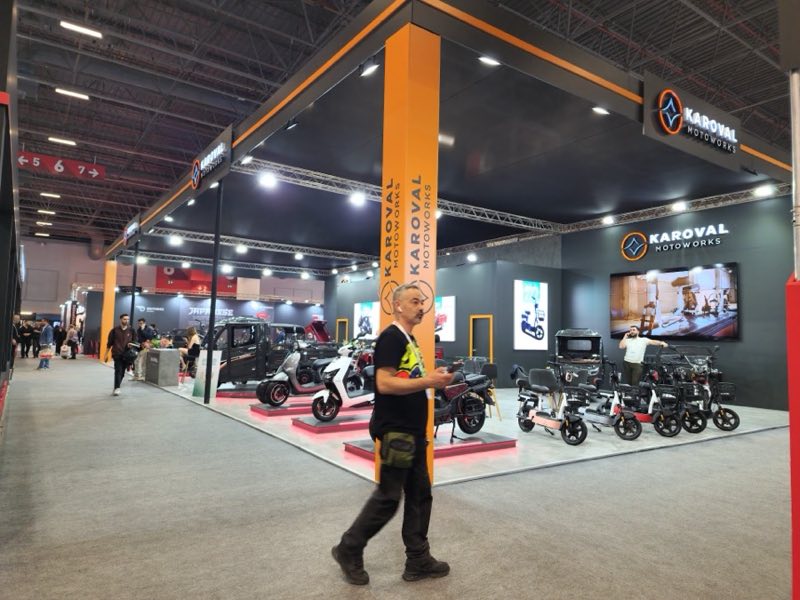
Fair halls are lit high and flat; the perceived quality of every stand under that ceiling is set by its own lighting plan. Light drives visibility, product perception and photography — and it is designed with the stand, not added to it.
Three layers
- General: the stand's base illumination, even and sufficient — a dim stand reads as closed
- Accent: spots directed at products and messages, steering the visitor's eye in a planned order
- Atmosphere: brand-coloured strips, backlit surfaces, decorative warmth
The balance sets the character: neutral and crisp for technical products, warmer tones for lifestyle brands.
Colour temperature and accuracy
Colour temperature changes what the product appears to be: food wants warm light, metal and machinery read correctly under neutral-cool. For textiles, furniture and anything colour-critical, specify high-CRI sources — under poor colour rendering, the product contradicts its own catalogue, and visitors notice in the conversation. Where brand colour matters, keep coloured atmosphere light off the critical surfaces: brand walls get neutral light, coloured effects go elsewhere. That coordination between lighting and graphics is where "the logo looks wrong on site" is prevented.
Backlit graphics
Backlit panels give print luminous depth that front-lit graphics cannot match — among the most efficient visibility investments for being seen from across the hall. Quality lives in the evenness of the light behind the fabric; a blotchy backlit panel looks worse than plain print, so test critical surfaces before the fair.
Power planning
Order power after the lighting plan is final, with headroom — on-site power upgrades are slow and expensive. Where the fair's contractor must make the main connection, check the schedule and tariff in advance. LED fixtures are the default: lower consumption fits smaller power orders, and low heat matters in enclosed display cases with sensitive products. Keep spare fixtures and a person with electrical authority on site, and set a daily switch-on routine — the circuit that tested fine at build and stayed dark on opening morning is a fair classic.
The checklist
- Spot angles never aimed at visitors' eyes
- Screen brightness balanced against surrounding light
- Meeting areas lit comfortably and shadow-free
- Final focus set at night, under the hall's fair-mode lighting
- Photography check — the stand must photograph as well as it presents
Lighting looks like a budget line to trim; it is the visibility itself. Compare photos of the same stand well-lit and under-lit — the argument ends there.
Judging a lighting quote
Evaluate lighting proposals as a plan, not a fixture list: which surface gets which fixture, at what angle, to what purpose — drawn on the stand layout. Confirm the quote includes installation, focusing and show-period support; a spot hung but never aimed is random light. Cross-check the rig's total consumption against the power order; a mismatch surfaces on site as either a tripped supply or an oversized tariff. Ask for the focusing session at night under hall fair-mode lighting, and keep the daily switch-on routine — the circuit that passed at build and stayed dark on opening morning is a fair-floor classic for a reason.
For end-to-end support with your exhibition stand or corporate event — from design to on-site delivery — get in touch, or see our recent projects.