Corporate Event Planning Checklist
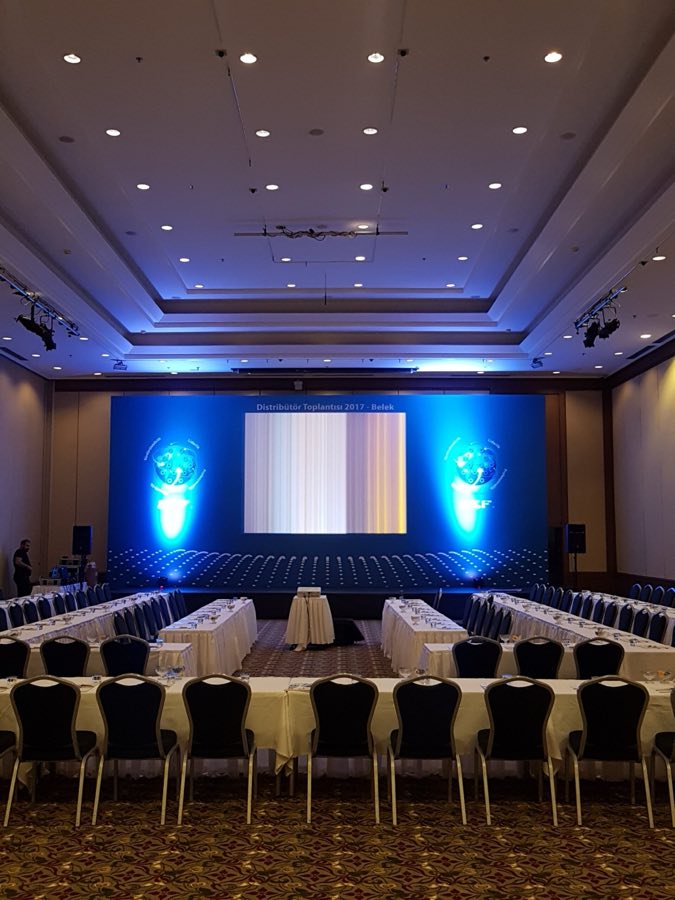
A corporate event is a set of interdependent workstreams that need to run in the right order. The checklist below applies to corporate events of any size and follows the sequence in which decisions should actually be made.
1. Objectives and success criteria
Start by writing down what the event is supposed to change: dealer alignment, employee motivation, product awareness, press coverage. Attach measurable criteria to the objective — attendance rate, number of qualified conversations, feedback scores. Venue, concept and budget decisions all depend on this definition; without it, they float.
2. Budget structure
Build the budget as line items, not a single figure:
- Venue and accommodation
- Stage, sound, lighting and technical production
- Catering and hospitality
- Speakers, performers and content production
- Transfers and logistics
- Decor, print and branding
- Contingency reserve
Track three columns per line: planned, committed, actual. Update the table every time a contract is signed or an invoice is paid; at any point in the project you should be able to answer "where do we stand" in minutes.
3. Timeline and ownership
Plan backwards from the event date and fix the milestones: venue contract, invitations, technical survey, rehearsal, build-up. Assign exactly one owner per work item — shared ownership is unowned work — and review progress in a short weekly meeting.
4. The guest journey
Walk through the event from the guest's perspective: how the invitation arrives, what happens at the car park, how long registration takes, where the breaks happen, what the exit feels like. Every point where this mental walk-through stumbles is a real-day problem waiting to happen.
5. Supplier coordination
Venue, technical, catering, entertainment and transport suppliers each know their own job and none of them knows the others'. Collect contact details, site access times and delivery points in one document, and hold a joint coordination call in the final week. Suppliers should deal with a single point of contact on the organiser's side.
6. Technical survey and rehearsal
Visit the venue with the technical team: power capacity, ceiling height, rigging points, loading access, internet. The day before the event, run a technical rehearsal and a full run-through — presentations on the actual show computer, microphones with the actual speakers. Anything skipped at rehearsal gets its first test in front of the audience.
7. Show day and contingencies
Write the run sheet minute by minute and distribute it to the whole floor team. Pre-agree responses for the three most common disruptions: a delayed speaker (movable programme blocks), a technical failure (redundant equipment and one technician dedicated to fault response) and attendance variance (a pre-agreed flex margin with the caterer).
8. Afterwards
Send thanks and any promised materials within two days. Run the feedback survey, compare results against the original success criteria and hold a team debrief. Archive the whole project folder — it is the starting template for the next event and the fastest way to shorten the next planning cycle.
For end-to-end support with your exhibition stand or corporate event — from design to on-site delivery — get in touch, or see our recent projects.